
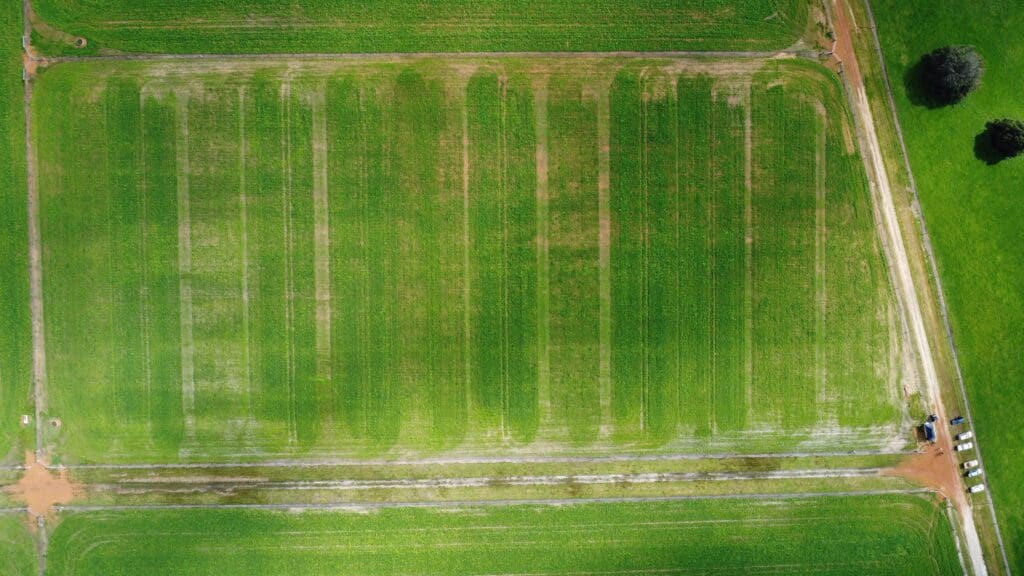
In Stage 1 of the Demonstrating the Difference Project, some commonly used fertility program approaches were applied to strips of a multi-species cover crop mix, under different grazing regimes to assess the pros and cons of alternative forage production practices. Three different programs and a control were implemented on replicated, randomised strips. Benchmark soil tests were taken, and dry matter and forage quality data was collected. The full results of Stage 1 can be accessed here.
- Program 1 – based on DPIRD’s Nutrient Calculator and agronomist recommendations. It will involve pH adjustment and seasonal PKS applications with granulated fertilisers as informed by soil testing, plus N applications
- Program 2 – follows agronomist recommendations based on the balancing of soil base saturation percentages and the application of organic fertilisers as determined by soil tests.
- Program 3 – follows regenerative agriculture based recommendations and involve a range of strategies to try and improve nutrient use efficiency including pH adjustment, biological and nutritional planting furrow treatments, combining fertilisers with carbon sources and/or bio-stimulants, and the application of foliar nutrient sprays, informed by soil and plant tests.
The project is now being continued over into a second season. One of the observed outcomes from Stage 1 was that grazing, and not grazing across a section of the strips in the growing season significantly altered the plant species composition in those sections. Where the mix was grazed, more graze tolerant species persisted, where it was not grazed, taller annual species dominated. As such, these sections now need to be treated separately and the different sections in Stage 2 will be referred to as Annual Cover Crop Mix (ACCM) and Multi-species Grazing Mix (MGM).
The plan for this season is to:
- Carry out soil tests on all the strips in both the ACCM and MGM sections.
- Continue with fertility program recommendations as per stage 1 from project agronomists.
- Graze the ACCM and MGM strips as per best practice during the season. Perform cuts and feed analysis prior to graze events and carry out visual post grazing assessments.
- Tissue testing/sap testing as needed during the season to inform programs.
This Lower Blackwood LCDC project is hosted by Dairy Farmers Neville, Gary & Elaine Haddon and is led by consultant & agroecologist Mark Tupman of Productive Ecology with assistance from agronomist Anthony Quinlan of Soil Dynamics, and agronomist Graham Mussell of TopSoil Agriculture.
The project is supported through funding from Healthy Estuaries WA – a State Government program that aims to improve the health of our South West estuaries.

