
Starting from scratch

  • Starting from scratch

    Posted by Ie Wen Kwee on 07/11/2025 at 7:09 am

    I have been listening with great interest to all of the podcasts about establishing multispecies pastures and cover crops, succession planting and soil/soil microbe health. The basis however for most of these discussions is with an assumption of having some established pasture to build on. I’d love to hear some thoughts and advice for those who are starting from scratch. Here’s a few questions that come to mind, and if I may I’ll follow with what I’m facing as an example.

    Is cover cropping a good way to start?

    Is multi-species helpful at the start or would a cheap and easy-to-grow monoculture be a better stepping stone?

    Is irrigation needed to get started?

    Is tilling and/or spraying recommended to get a jump on weeds?

    Can it be done without grazing animals?

    What are common mistakes for someone trying to rehabilitate land?

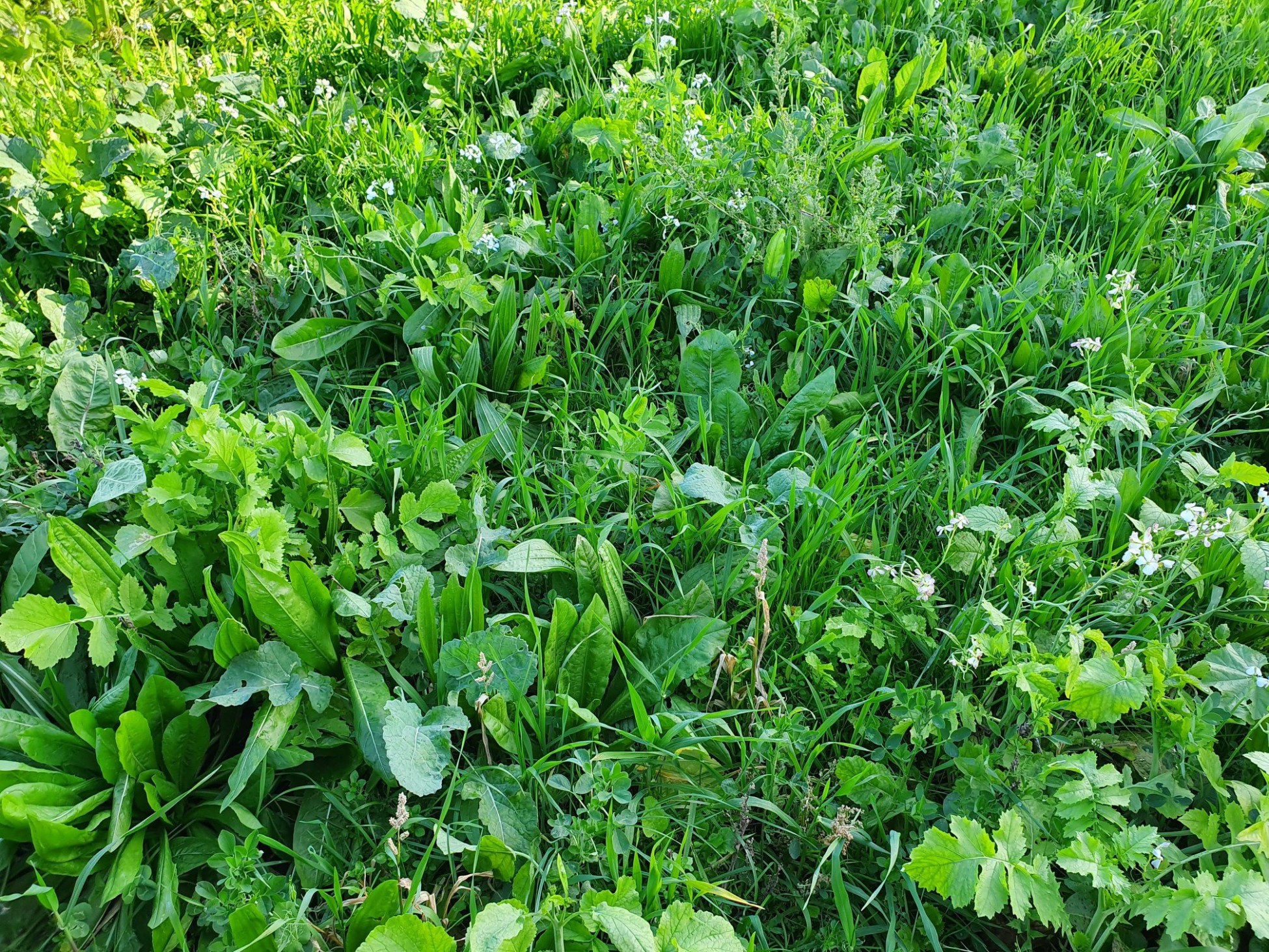
    A bit about my situation: I have taken on management of a small family property (28acres) which has for the last 10-12 years been neglected. The soil is compacted and has large swathes of soursob or cape weed monocultures. We also have an elevated sloped area which has minimal to no soil cover, is very gravelly and sheds vast amounts of water very quickly. We have no livestock. Equipment wise we have a slasher and hoe.

    My goal for now is purely land improvement as I am in the lucky position of not being financially reliant on the property. I would however eventually like to run a free small scale activities for profit.

    I am loath to spray because we’re located on a tributary to the swan and would prefer not to exclude the kids and goats from the sprayed “pastures”. Where does that leave us?

    My plan is to start trialling cover cropping with as cheap a mix as possible and which contain the 5 families (grass, legumes, brassicas,cereals and chenopods) in 3 scenarios:

    1. A 3000m2 weed ridden field
    2. buffer and inter-row planting on an ailing orchard
    3. A strip or patch on the bare hill

    I figure the process will be slow but the hope is that as long as there is some growth then there is some contribution to the soil and I would get improvements year on year. Does this sound like a reasonable approach for a heavily degraded landscape?

    One thing that Mark Tupman raised in the soil systems podcast that caught my attention was that covers should be planted in autumn ideally dry or before the weeds get a chance to germinate after first rains. I have heard some conflicting advice that I should let the weeds germinate then do a light slash+surface till before cover cropping so that I also start reducing the weed seed bank. Thoughts? Brooke Devine in regenerating your farm and waterways even suggests spraying.

    I’m excited to get started but also am worried about sinking time and finances into activities with no hope of success.

    As an aside, I am also now building a Johnson su compost into which I’m incorporating biochar and which I will use to innoculate the cover crop the following season. (Ideally each different measure would be trialled separately but I’m one person working a desk job alongside the farm so can only do so much!)

    I look forward to hearing your thoughts!

    Mark Tupman replied 1 week ago 3 Members · 3 Replies
  • 3 Replies
  • 65c9af45798df bpthumb

    Max Stam

    Member
    08/11/2025 at 9:29 am

    I would start by checking soil pH and add lime if needed. I’d suggest, based on your weeds, it will be. A simple soil test kit is available from your garden centre or hardware store. Get the pH right and most of your weeds will fade away. When Weeds Talk is a great book to help figure lots of this out. Ask your local library to get it in.

    Johnson Su compost takes 12 months but you can gain much benefit from vermicompost extracts and vermicompost is available for sale in Perth.

    Ideally your covercrop seed should be treated with compost extract or the extract placed in furrow with the seed. Disc equipment is much better for placing your seed because it does less damage to your fungi.

    Animals are very important. They add biology to the soil which is by far the biggest part of regen ag. Diversity helps too. Cattle followed by sheep followed by poultry is a good blend. The animals need to be very confined and moved often. Providing a mineral station with a diverse range of possible minerals needed. The animals will hammer those tubs that are most needed and leave the ones not needed. Then they crap it out and spread it for you.

    Unless you are in a very dry region, irrigation is def NOT needed.

    Look up bale grazing for your gravelly area. Again confine to a small area around each bale.

    There are those who recommend spraying but these have not yet understood that tilling and spraying is what got us into this mess in the first place. Roundup kills soil biology.

  • 68f0fb0b253d0 bpthumb

    Ie Wen Kwee

    Member
    09/11/2025 at 5:02 pm

    Hi Max,

    Thank you very much for your detailed response and all the great advice. I hope my queries/comments below keep the conversation general enough that it’s still useful for others in a similar situation.

    – How quickly would the weeds respond to the adjustment in soil PH? I assume planting cover crops or pasture into any weed ridden fields would still need to address the weeds in the first couple of seasons. Appreciating that tilling is not a long term strategy due to damage to soil structure/microbes etc. would light tillage to knock down weeds immediately followed by sowing be so detrimental just to start? Or would the preference still be to sow before the weeds germinate and suppress weeds just by action of the cover crops?

    – Without disc equipment is broadcasting and light rolling a feasible alternative to using disc equipment without damaging the soil?

    – I do not unfortunately have access to livestock (except for 3 goats). I understand the great benefit of livestock, but is regenerative agriculture possible without? Any other tips/tricks/methods to improve soil biology (already considering innoculants on seed or direct injected). And for regenerating gravel/bare ground?

    Thank you again.

  • 63636a90c7ffd bpthumb

    Mark Tupman

    Member
    28/11/2025 at 12:07 pm

    Hi Wen,

    I just read your post and would suggest that in terms of effectiveness, allowing weeds to germinate first then lightly tilling or spraying will likely be more effective than dry seeding. Dry seeding is easy and cheap and can be used when you already have a stand of good existing species, i.e perennials, in the field or if weeds aren’t likely to be a big burden. Neither of these situations applies to you at this stage.

    Regards

    Mark

Log in to reply.