

 Producer
 Kate Tarrant
ProducerForum Replies Created
-
Kate Tarrant
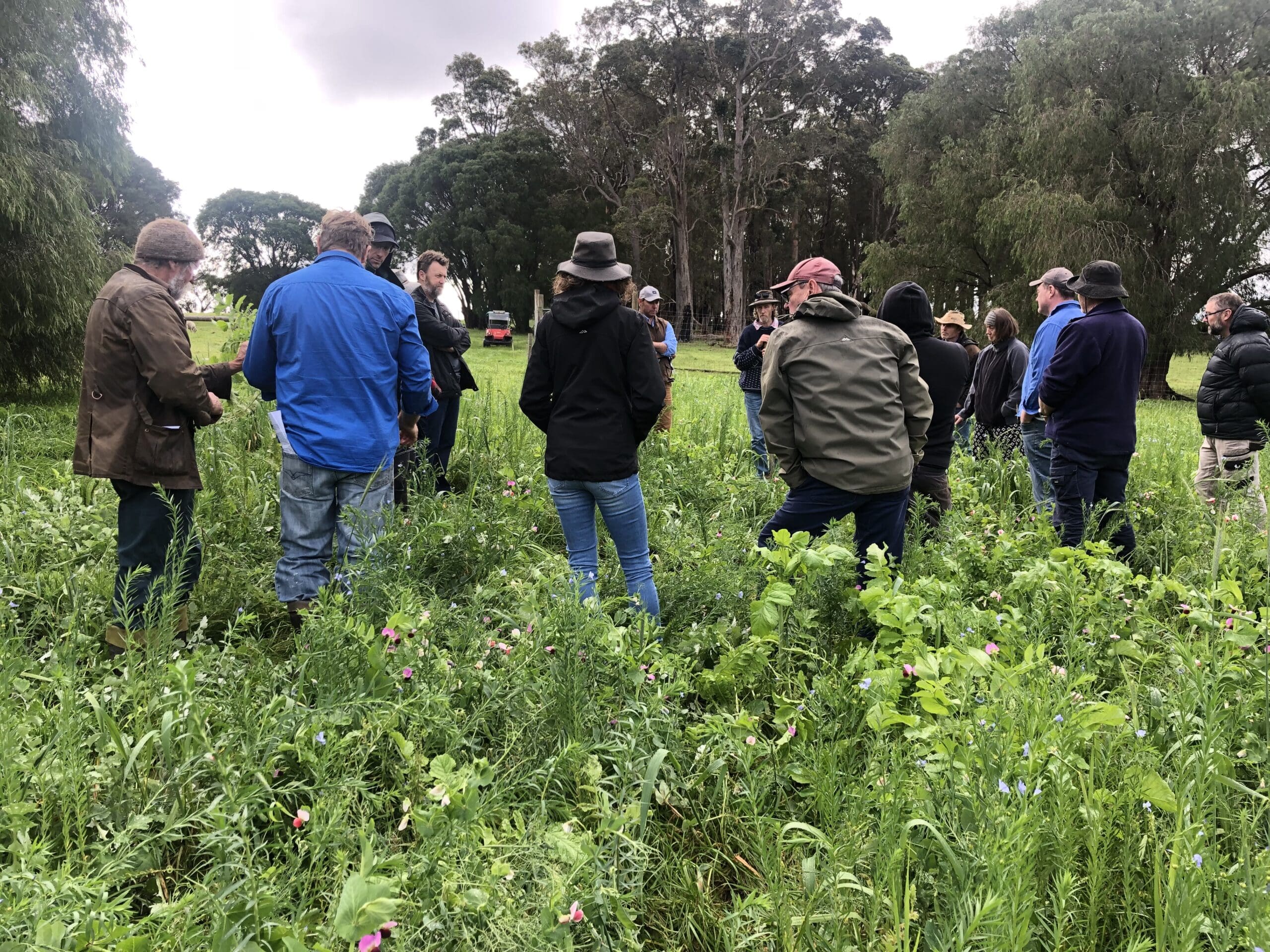
Member27/04/2024 at 9:10 am in reply to: Percentages of species and the sub species in a multi mix pastureHi Michael, Dr Judi Earl recommends the percentages shown in the photo attached to this reply. You’ll also get some really good information in this content hub… https://lower-blackwood.shorthandstories.com/online-guide-to-pasture-biodiversity-in-the-lower-blackwood/index.html

lower-blackwood.shorthandstories.com
Online Guide to Pasture Biodiversity in the Lower Blackwood
Biodiversity - the root of soil health and resilience
-
Hi Will, you’ll find some useful information in this article…https://lowerblackwood.com.au/targeting-plant-nutrition/.
My understanding is that the volume of potassium required generally can’t all be addressed through foliars, improving soil biology will assist making what you have in the soil more available, helpful to know your totals as Max says, but you may still need to add via soil amendments (granular or liquid).. how much depends on your production goals. There are some general rules of thumb mentioned in the article on biology friendly fertilization worth noting.
lowerblackwood.com.au
Targeting Plant Nutrition - Lower Blackwood LCDC
The application of nutrients, or fertilisers, that plants require is an important component in primary production operations. For numerous reasons, crops or
-
Hi Robbie, there are so many but here are some of my go to’s:
For the Love of Soil – Nicole Masters
The Farm as Ecosystem – Jerry Brunetti
Holistic Management – Allan Savory
Fertility Pastures – Newman Turner
Natural Sheep Care – Pat Coleby
Natural Farming – Pat Coleby
The Ecological Farm – Helen Atthowe
-
I’m thinking of starting to feed lupins soon as like a lot of others our pasture has dried off much earlier than last year. What do people recommend as a maintenance volume / head / week .. not trying to fatten lambs. @gemma_justin @ben-mcdonald @kylie-silverthorne
-
Doesn’t the selective grazing really only happen when the stock density is too low? Be great to see a pic of what your paddock looks like when you are ready to move the stock off ..
So are you saying that to leave 5 to 7 cm of fodder behind is too much, better to graze it hard then not come back for 90 days(Eric) or until the bottom leaves are yellowing (Mark).?
Having learned with RCS, Dick Richardson, & Judi Earl they all are a bit different but it sounds to me like what you are describing is more like what Dick advocates.
-
Kate Tarrant
Member04/10/2023 at 10:48 am in reply to: Photosynthesis, Oxidation & the Energy EquationThanks Mark, fascinating, I have to admit I do find it a bit complicated to wrap my head around the Eh-pH thing but in my view it really does confirm that the principles behind regenerative agriculture are absolutely underpinned by science. For me the key points to note from your article is more about what we do with that science – and that is as you say:
Firstly, we need to find ways to minimise the use of practices that have an oxidising effect on the soil and/or damage soil life.
This involves moving towards conservation/minimal/no tillage, biologically considerate nutrition, pest, disease and weed management methods, keeping the soil covered to avoid exposure, etc…
Simultaneously we must implement strategies that provide soil microbes with more fuel to drive beneficial activity.
These include the growing of cover crops and interplanting companion species, increasing plant diversity, mulching with organic residue, composting, targeting nutritional applications to optimise photosynthesis, managing grazing to improve pasture growth, etc…
I did find this review (uploaded to the documents tab in the as well in case the link doesn’t work ) by the same guy (& others) for those that do want to take a deep dive. https://johnkempf.com/wp-content/uploads/2021/07/Soil-and-plant-health-in-relation-to-dynamic-sustainment-of-Eh-and-pH-homeostasis-A-review.pdf
Also if you want to listen to the podcast Mark is referring to check it out here.. https://investinginregenerativeagriculture.com/2023/09/19/olivier-husson/
-
The trick in our short growing season with annuals is to try to keep the pasture in a vegetative state- that can be a challenge if you don’t have enough livestock.
What do you think about leaving some paddocks to ‘stockpile’ for summer standing feed and focus on the remaining paddocks for quality. By that I mean moving slow enough to ensure recovery but fast enough to keep it vegetative.. at the moment I reckon that’s leaving for only around 40 days, that will speed up as it warms up. A bit of a combo of Dick Richardson’s method with Judi Earls.
-
Sounds very similar to what’s happening at ours. Got some foliars on some of the paddocks last week but got foiled by the rain so will be pulling out all stops as soon as this front has gone .. with very similar mix to what you are putting on ( except I had to buy the fish hydrosylate & seaweed tonic .. maybe I’ll make my own this spring.
-
Will be watching but strip size should mean moving on after 2 grazing days.
-
Thanks Justin, great advice and will do!😀
-
Great use of a waste product Darren!
-
Great discussion @Eric & @mark .. so what will be your grazing strategy in the non growing season – will you keep the same density, daily moves & rest periods – I am assuming you are going to have a mix of perennials that are active on the season shoulders in with your annuals that have dried off.
-
Kate Tarrant
Member22/10/2023 at 9:40 am in reply to: Perennial Pasture Species for High Rainfall Mediterranean RegionsThanks Eric, exactly what I wanted to know & pretty much our experience as well. Interesting about the perennial rye – good point. Fine for irrigated pastures I guess.
-
Kate Tarrant
Member21/10/2023 at 10:20 am in reply to: Perennial Pasture Species for High Rainfall Mediterranean RegionsGreat work Eric! I’m really interested in how you got them established.. what sort of paddock prep, seeding timing & method?
Also not sure why not going into dormancy is a problem ( perennial rye)?